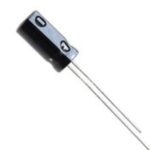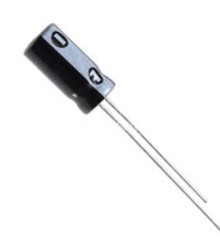

22 µF, 50V (Aluminium Electrolytic)

SKU: RB02-02-0024

Apple Shopping Event

Hurry and get discounts on all Apple devices up to 20%

Sale_coupon_15

₹10.00

0 People watching this product now!
  • Pick up from the Woodmart Store

To pick up today

Free

  • Courier delivery

Our courier will deliver to the specified address

2-3 Days

Free

  • DHL Courier delivery

DHL courier will deliver to the specified address

2-3 Days

Free

  • Warranty 1 year
  • Free 30-Day returns

Payment Methods:

Description

22 µF, 50V (Aluminium Electrolytic), Through hole

Identification and Orientation
The Long Lead Rule: The positive lead (anode) is visibly longer than the negative lead on through-hole models.
The Stripe Indicator: The capacitor body features a printed stripe (usually containing a minus symbol -) marking the negative lead.

A 22 μ F electrolytic capacitor is a polarized energy storage component primarily used in DC circuits. Its key applications include smoothing voltage ripples in power supplies, decoupling noise near integrated circuits (ICs), stabilizing audio signals, and setting timing intervals in oscillation circuits.

Common Applications
Power Supply Filtering: These capacitors absorb and release electrical charge to smooth out AC voltage ripples and provide a steady, stable DC output. Low-voltage versions (like 16V to 50V) are common in regulated linear and switching power supplies, while high-voltage 22 μ F capacitors (such as 400V or 450V) are heavily utilized in industrial inverters, LED drivers, and AC/DC converter DC-links.
Decoupling and Bypassing: Placed directly on circuit boards near IC supply pins, they act as localized energy reservoirs. They supply rapid current during fast switching transients, which prevents voltage drops and suppresses high-frequency noise.
Audio Signal Coupling/Decoupling: In audio amplifiers and pre-amps, 22 μ F capacitors are frequently used in the signal path to pass the AC audio signal while blocking unwanted DC bias voltage from bleeding between different stages.
Timing Circuits: They are employed in resistor-capacitor (RC) timing applications (such as in 555 timer circuits) to govern the specific charge/discharge rate and set critical time delays.

Customer Reviews

0 reviews
0
0
0
0
0

There are no reviews yet.

Only logged in customers who have purchased this product may leave a review.